
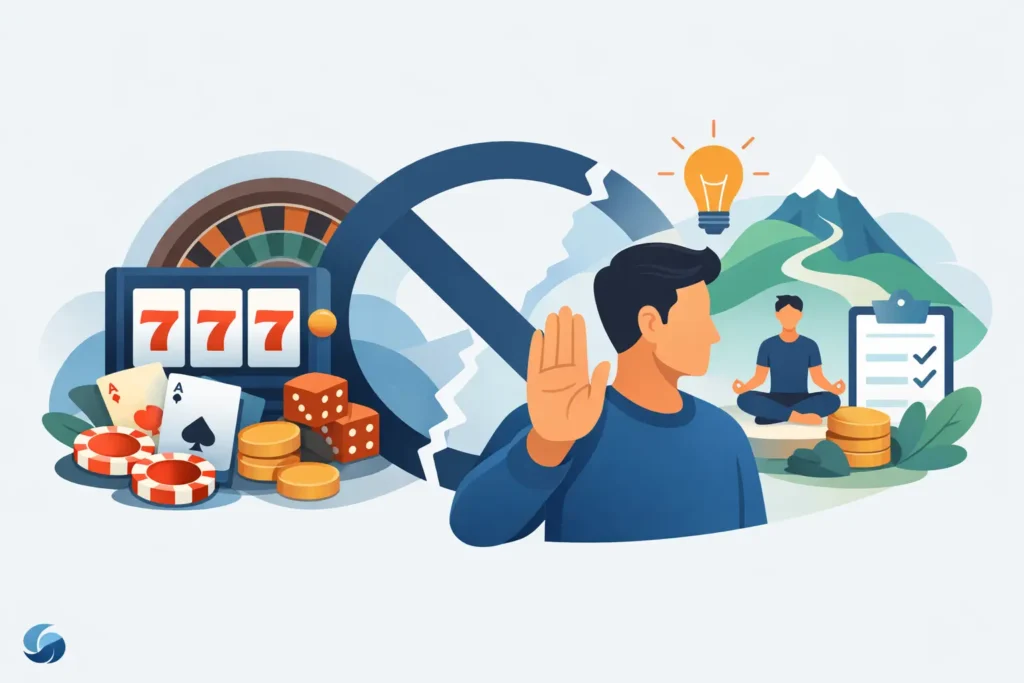
That moment after a loss is usually the worst part. Not just the money. The sinking feeling, the lying, the promise that this was the last time, and the horrible pull to do it again anyway. If you are looking for the best ways to stop gambling, you probably do not need another lecture. You need something that actually helps.
The problem with gambling is not just gambling
Most people think the answer is more willpower. It is not. If willpower were enough, you would have stopped already.
Gambling becomes a pattern because it starts doing a job in the background. For some people it is escape. For others it is relief from stress, boredom, loneliness, pressure, anger or that constant restless feeling that never quite switches off. Sometimes it gives a rush. Sometimes it gives numbness. Either way, it becomes tied to emotional survival more than people realise.
That is why smart people, loving parents, hard workers and decent people can still end up stuck in this cycle. It is not about being weak. It is about your mind learning a fast route to change how you feel.
Why the urge feels stronger than logic
When gambling has become a habit, your thinking brain often turns up too late. The urge arrives first. Then come the justifications. I will only spend a bit. I can win it back. I deserve a break. I have had a bad day. No one will know.
This is where people get frustrated with themselves. They know it is damaging their money, their sleep, their relationships and their confidence, but they still feel pulled towards it. That pull is real. It is learned, emotional and often automatic.
If you only try to fight gambling at the level of logic, you can end up in a constant battle with yourself. You hold off for a while, then one stressful evening, one argument, one drink, one payday or one lonely hour and you are back in it.
The best ways to stop gambling start with removing access
If you want to stop, make it harder to act on the urge. Not tomorrow. Today.
This means putting practical barriers between you and the behaviour. Self exclusion tools can help. Banking blocks can help. Handing over financial control for a period can help. Closing accounts matters. Unsubscribing from emails and deleting apps matters too.
Some people resist this because it feels extreme. It is not extreme if the habit is costing you peace, trust and money. It is sensible. In the early stage, you do not need to prove how strong you are. You need to make relapse more difficult while you build real control.
This also applies offline. If there is a bookmaker on your usual route, change the route. If gambling starts when you are alone at night, change the evening routine. If payday is the danger point, create a plan for payday before it arrives.
Tell someone before your mind talks you out of it
Shame keeps gambling alive. It tells you to hide it, manage it quietly and sort it yourself. That usually keeps the cycle going.
One of the best moves you can make is telling one safe person the truth. Not the polished version. The truth. What you are doing, how often, what it is costing, and where you feel out of control.
This is not about humiliation. It is about breaking secrecy. Once someone else knows, the spell starts to weaken. The problem is no longer sitting in the dark growing stronger.
For some people this is a partner, parent or friend. For others it is a professional. What matters is honesty and support, not pretending you have it handled when you do not.
Replace the function, not just the habit
This is where many people get stuck. They stop gambling for a few days or weeks, but they do not replace what gambling was doing for them. So the stress is still there. The emptiness is still there. The tension is still there. The trigger remains, and the mind reaches for the old answer.
If gambling gave you escape, you need another way to come down fast. If it gave you excitement, you need healthy stimulation. If it gave you relief from anxiety, the anxiety needs dealing with properly.
That does not mean filling every hour with distraction. It means getting honest about the job gambling has been doing and replacing that job with something that does not wreck your life.
For some, that means movement, structure and less time alone with a phone. For others, it means finally addressing anxiety, trauma or old emotional pressure that has been driving the pattern for years. This is the part people often miss. The gambling is visible. The reason underneath it is usually where the real change happens.
Stop treating every urge like an emergency
An urge is uncomfortable, but it is not a command.
A lot of people relapse because they panic when the urge hits. They think the fact they want to gamble means they are back to square one. It does not. It means the old pathway has lit up. That is all.
When the urge comes, slow everything down. Delay the action. Even twenty minutes can break the automatic chain. Move your body. Leave the room. Put your phone somewhere awkward. Message the person who knows. Drink water. Breathe properly. Make the urge inconvenient.
You do not need to feel perfect to stay in control. You just need to get through the wave without acting on it. Urges rise, peak and pass. They feel permanent when you are in them, but they are not.
The best ways to stop gambling often involve deeper change
If you have already tried white knuckling it, making promises, scaring yourself, or getting caught and stopping for a while, you already know surface level fixes do not always last.
That is because gambling is often connected to something deeper in the unconscious patterning of the mind. Stress responses, emotional triggers, unresolved experiences, beliefs about money, self worth, failure, pressure or reward can all feed the cycle.
This is why direct change work can be so effective. Instead of talking around the problem for months, the focus is on updating the pattern that keeps firing the urge in the first place. When that changes, the behaviour becomes easier to leave behind because you are not fighting the same internal battle every day.
It depends on the person. Some people mainly need structure and accountability. Others need proper help to shift what is driving the compulsion. Often it is both. The point is this: if you keep repeating the same cycle, the answer is not usually more guilt. It is better change work.
Families need honesty, not false reassurance
If gambling has affected your family, trust may be damaged. You may want to calm everyone down by saying it is sorted. Be careful with that.
Trust does not come back through promises alone. It comes back through consistent action. Transparency. Changed routines. Fewer secrets. Practical safeguards. Real follow through.
If you are the family member reading this, you can be supportive without making the problem disappear for them. Paying off debts quietly, covering up lies or constantly rescuing the person can keep the pattern going. Support is important. So are boundaries.
What real progress looks like
Real progress is not just not gambling for a week. It is feeling less pulled. Thinking about it less. Being more honest. Sleeping better. Not dreading bank statements. Feeling your self respect come back.
It is also catching the pattern earlier. Spotting the trigger before it becomes a binge. Knowing what to do when stress rises. Building a life that does not need gambling to feel manageable.
And if you slip, that does not mean you have failed. It means something in the chain needs tightening up. Shame says give up. Change says learn and respond fast.
The best ways to stop gambling are not glamorous. They are honest, practical and consistent. Remove access. Break secrecy. Understand what the habit is doing for you. Replace the function. Get proper help if the pattern keeps returning.
You do not have to keep living in this loop. You do not have to keep losing money, lying to people you love or feeling frightened of yourself. Change can happen much faster than people think when you deal with the real driver rather than just the visible behaviour.
Ready to experience real change or keep repeating the same pattern? Book your Real Change Meeting here https://Derekmindcoach.as.me/