
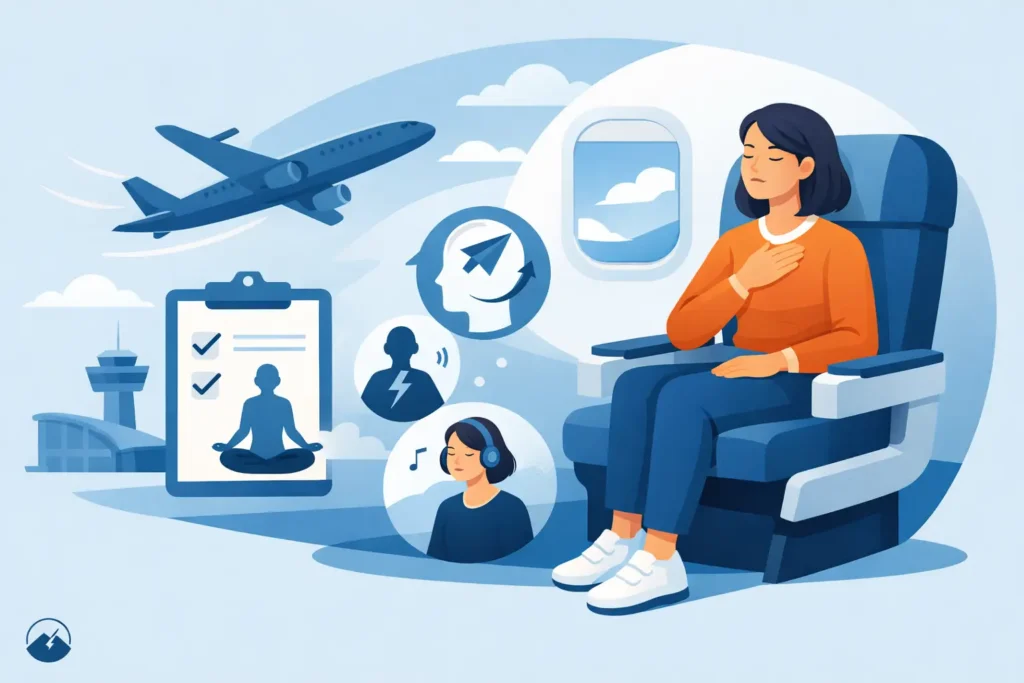
That knot in your stomach can start days before the airport. For some people, it kicks in when the flight is booked. For others, it hits at the gate, during boarding, or the second the aircraft door closes. If you are searching for the top strategies for flight fear, you probably do not want a lecture on aviation statistics. You want something that actually helps.
Flight fear is rarely just about the plane. If it were, a few reassuring facts would sort it. But most people already know flying is statistically safe and still feel terrified. That tells you something important. The problem is not logic. The problem is the way your mind and body have learned to react.
Why flight fear feels so intense
When someone is afraid of flying, they often think the fear means something real is wrong. It does not. It means your system is firing a threat response. Your body is acting as if you are trapped, powerless, exposed, or about to lose control.
That is why flight fear can feel bigger than fear. It can bring panic, dread, nausea, shaking, racing thoughts, tears, or the urge to run. Some people grip the armrest and count every sound. Others avoid looking out of the window, checking in, or even talking about travel. Some drink to get through it. Some cancel holidays, turn down work trips, or spend weeks in fear before a short flight.
None of that means you are weak. It means your unconscious mind has attached flying to danger. Once that pattern is there, the body reacts first and the thinking mind scrambles to catch up.
The real problem is not the aircraft
This is where people often get stuck. They keep trying to talk themselves out of fear while the fear keeps winning. They search for coping tips, breathing tricks, distraction apps, airport routines, lucky seats, or ways to endure the flight.
Some of that can help at the surface. But if you are still white-knuckling every journey, then the pattern has not changed. You are managing it, not solving it.
In real life, flight fear is often tied to one or more deeper drivers. It might be fear of panic itself. Fear of being trapped. Fear of not being able to escape. Fear of losing control in front of others. Sometimes it is linked to a bad flight, a separate trauma, a period of high stress, or another anxiety pattern that found a new target.
That matters, because the best solution depends on what is actually driving the fear.
Top strategies for flight fear start with the right target
If you aim at the wrong thing, you get temporary relief at best. If you aim at the real driver, change becomes much easier.
For example, if your real issue is claustrophobia, you need to deal with the trapped feeling. If your real issue is panic, you need to break the fear of your own body reactions. If your fear began after a turbulent flight, your mind may still be replaying that experience as unfinished danger. If control is the issue, then every stage of air travel can feel threatening because you are handing over control from the moment you board.
This is why two people with the same fear of flying can need very different help.
What actually helps before a flight
The best pre-flight strategy is not spending three days feeding the fear. A lot of people do this without realising. They search worst case scenarios, scan weather reports, imagine crashes, rehearse panic, and keep asking themselves how they will cope. That mental rehearsal trains the fear response.
A better approach is to stop treating every thought as a warning. Thoughts are not predictions. They are mental events. If your mind says, what if I panic on take-off, that does not mean panic is coming. It means your brain is doing what fearful brains do which is trying to protect you by imagining danger.
It also helps to keep your body steady. Too much caffeine, lack of sleep, not eating properly, and rushing to the airport in a heightened state all make fear more likely to spike. That does not cause flight fear, but it can make your system far more reactive.
Simple preparation works better than superstition. Know your route to the airport. Leave enough time. Choose what you want to listen to. Tell yourself the truth, not a performance. Something like, I may feel anxious and I can still fly, is far more useful than trying to force yourself to feel totally calm.
What helps during take off, turbulence and mid flight panic
When fear rises, most people do one of two things. They either fight it or surrender to it. Neither works especially well.
Fighting fear usually means tensing the body, holding the breath, scanning for danger, and trying to force calm. Surrendering to it means treating every body sensation as proof that you cannot cope. Both feed the cycle.
The more useful response is to stop adding fear to fear. If your heart races, let it race. If your stomach flips, let it flip. Those sensations are unpleasant, but they are not dangerous. Panic builds when you treat the first wave of anxiety as an emergency.
Breathing can help, but only if you use it properly. Not as a desperate attempt to make the feeling disappear. More as a way to signal to your body that you are not under attack. Slow, steady breathing with a longer exhale can help reduce the build up. So can unclenching your jaw, dropping your shoulders, and uncrossing tight muscles you have not even noticed are braced.
Turbulence is a major trigger for many people because it feels like loss of control. But the emotional meaning you give it matters more than the movement itself. If every bump means danger in your mind, your body will react hard. If you understand it as uncomfortable but normal movement, your response changes. Not overnight for everyone, but it does change.
The biggest reframe most people need
You do not have to love flying to stop fearing it.
That may sound obvious, but a lot of people secretly think success means becoming one of those relaxed travellers who falls asleep before take off. That is not the target. The target is freedom. Being able to get on the plane without your body acting as if you are walking into a disaster.
Some people become genuinely comfortable with flying. Others simply stop giving fear so much power. Both are wins.
It is also worth saying this clearly. Avoidance keeps the fear alive. Every cancelled flight, every excuse, every delayed booking gives short-term relief and long-term reinforcement. Your mind learns, good thing we escaped. That is why flight fear often grows, not shrinks, when it is left alone.
When coping strategies are not enough
There is a point where more tips do not help because the pattern is too established. If you have to sedate yourself, drink to get through a flight, rely on rituals, or spend weeks dreading travel, that usually means the issue sits deeper than surface coping.
This is where direct change work can make the difference. Rather than talking about the fear forever, the aim is to update the response that is causing it. That might mean clearing the imprint of an old event, reducing the panic pattern, changing the trapped response, or teaching the unconscious mind that flying is no longer a threat.
That is often why people who have tried to reason with themselves for years finally get relief when the right process is used. The change happens where the reaction is being generated, not just where it is being analysed.
In my experience, people are often relieved when they realise they do not need endless coping tools. They need the right target and the right process.
If a child or partner is affected too
Flight fear does not just affect the person carrying it. Families feel it. Partners adapt around it. Children pick up on it quickly. Holidays become stressful before they begin. Plans are cut down to avoid flying altogether. Sometimes everyone starts living inside one person’s fear.
That is another reason not to brush it off as just nerves. When a fear starts shrinking your world, it is worth changing properly.
Real change looks different from coping
Coping says, how do I survive this flight?
Real change says, why is my system reacting this way and how do we switch that pattern?
That shift matters. It moves you from endurance to control. It also removes a lot of shame. You are not failing at being rational. You are dealing with a conditioned response. And conditioned responses can change.
If flying has become a recurring battle, stop measuring success by how well you hide it. Measure it by whether the fear is still running your choices.
You do not need to keep proving to yourself that you can just about get through it. You can change the pattern that makes it hard in the first place.
Ready to experience real change or keep repeating the same pattern? Book your Real Change Meeting here https://Derekmindcoach.as.me/