
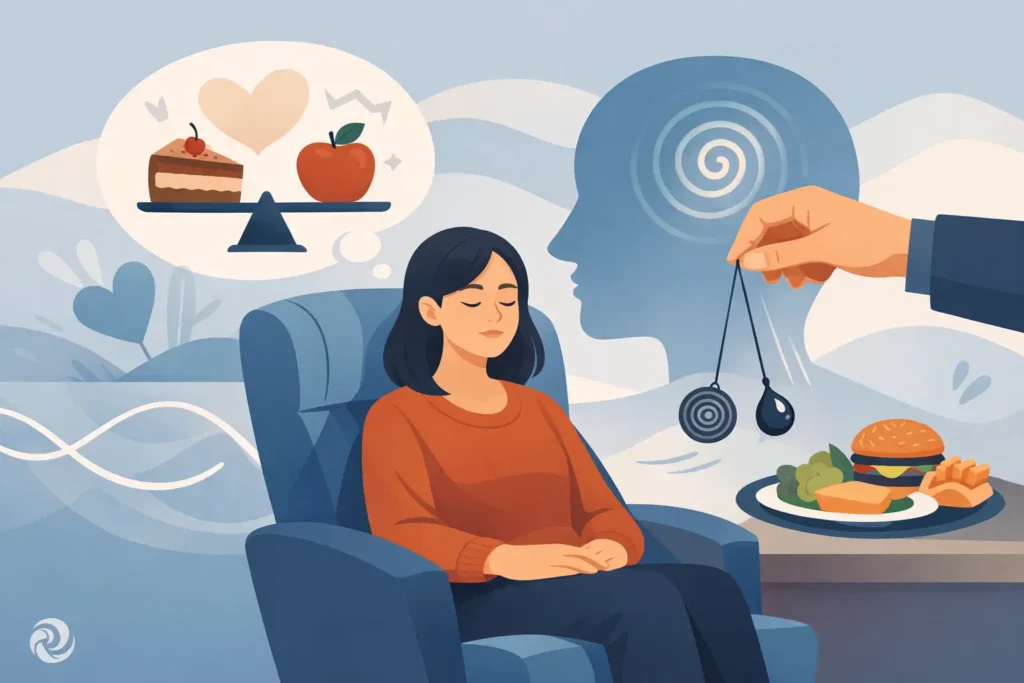
You tell yourself it is only a biscuit, only a takeaway, only one more evening of picking at food you were not even hungry for. Then the guilt arrives, followed by the promise to be better tomorrow. If that pattern feels painfully familiar, the problem usually is not a lack of willpower. It is that eating has become tied to comfort, relief, distraction or reward.
That is why stop emotional eating hypnosis can be so helpful. It does not work by forcing you to dislike food or by turning you into a different person. It works by changing the emotional and habitual pattern driving the behaviour in the first place.
For many people, emotional eating is not really about food. Food is simply the quickest route the mind has found to take the edge off stress, loneliness, boredom, overwhelm or self-criticism. If you do not change that inner pattern, diets often become another short-term fix followed by another setback.
What emotional eating really looks like
Emotional eating is eating for a feeling rather than for hunger. Sometimes it is obvious, such as reaching for chocolate after an argument or raiding the kitchen after a difficult day at work. Sometimes it is quieter than that. You may find yourself snacking while anxious, rewarding yourself with food every evening, or eating in secret because it brings a brief sense of calm.
The key point is this – the eating is serving a purpose. It may be helping you soothe stress, fill a gap, numb uncomfortable feelings or create a moment of relief when life feels heavy. That is why simply telling yourself to stop rarely works for long. Your mind believes the habit is helping you.
This is also why people can be highly capable in every other area of life and still feel completely stuck with food. They are not weak. They are running an unconscious pattern.
How stop emotional eating hypnosis works
Hypnosis helps by working with the part of the mind where habits, associations and automatic responses are stored. In everyday life, emotional eating often happens before you have had time to think it through. You feel something, a trigger appears, and the behaviour follows.
In hypnosis, the aim is to reduce the emotional charge behind those triggers and create a different response. That might mean helping you feel calmer in situations that usually send you towards food. It might mean weakening the link between stress and snacking. It might mean building a stronger sense of control, self-worth and pause.
This is not mind control. You do not lose awareness and you do not do anything against your values. Hypnotherapy is more like guided mental rehearsal and focused change work. You are relaxed, aware and still in charge. The difference is that the mind becomes more open to new ways of responding.
That matters because emotional eating is rarely solved at the level of logic alone. Most people already know what they should eat. The struggle is doing it when tired, upset, angry or emotionally drained.
Why diets often fail when emotions stay the same
A diet may change what is in your fridge, but it does not automatically change what happens after rejection, stress or exhaustion. If food has become your coping strategy, removing it without addressing the reason behind it can leave you feeling deprived and even more vulnerable.
This is where some approaches get it wrong. They focus only on discipline and ignore the emotional drivers. That can work for a week or two, sometimes longer, but old triggers tend to come back unless the underlying pattern changes.
Hypnosis is not a magic trick and it is not a replacement for medical advice where needed. But it can be a powerful way to deal with the part of the problem that many plans miss – the unconscious need that the eating is trying to meet.
What happens in hypnotherapy for emotional eating
Good hypnotherapy is not about playing generic relaxation audio and hoping for the best. It should be personal. Emotional eating can be linked to anxiety, trauma, low confidence, grief, learned family habits or years of self-criticism. Two people may eat for comfort, but for completely different reasons.
A skilled practitioner will usually explore when the pattern happens, what emotion comes first, what food represents to you and what you would need instead. For one person, the issue is stress and pressure. For another, it is emptiness or loneliness. For someone else, it is a rebellion against years of strict dieting.
The hypnosis itself may focus on interrupting automatic urges, strengthening emotional resilience and helping your mind connect food with nourishment rather than rescue. It can also support better boundaries, calmer thinking and a more respectful relationship with yourself.
That last part matters. Shame often makes emotional eating worse. If every episode is followed by self-attack, the stress increases and the cycle keeps going.
Can hypnosis stop emotional eating for everyone?
It depends on what is driving it and how ready you are to change. If emotional eating is mainly a learned habit linked to stress, routine or comfort, hypnosis can be very effective. If it is tied to deeper trauma, grief or long-standing anxiety, it may still help a great deal, but the work may need to go beyond food and address those root issues directly.
There is also a difference between someone who wants relief and someone who is genuinely ready to do things differently. Hypnosis is a tool for change, not a way to stay the same and somehow get different results. The best outcomes tend to happen when people are honest about their triggers and willing to practise new responses outside the session too.
That said, change does not have to take forever. Many people are surprised by how quickly a pattern can shift when the right emotional switch is found.
Signs your eating is emotionally driven
You may benefit from stop emotional eating hypnosis if food tends to appear in the same situations again and again. Perhaps you eat when you feel rejected, when the house is finally quiet, when work has left you frazzled, or when you need a reward for getting through the day.
Another clue is that the urge feels urgent but not physical. Real hunger builds gradually. Emotional hunger often feels sudden and specific. It wants sugar, crunch, comfort or fullness now. It can also leave you feeling disconnected, as if you were on autopilot.
If you have tried diets, calorie counting or strict plans and still end up in the same cycle, that usually suggests the issue is not knowledge. It is the emotional wiring behind the behaviour.
What to look for in support
If you are considering hypnotherapy, look for someone who understands habits and emotions, not just scripted hypnosis. Emotional eating is personal. You want support that feels safe, non-judgemental and practical, but also direct enough to create real change.
It helps if the therapist can explain things simply. You should understand what is being addressed and why. You should also feel that the work is about empowering you, not making you dependent on endless sessions.
At Derek Chapman Hypnotherapy, the focus is on helping people change destructive patterns quickly and effectively by working with the unconscious mind, emotional triggers and practical behaviour change. For many clients, that is the missing piece after years of trying to just be stronger.
Hypnosis is not about taking food away
This is worth saying clearly. The goal is not to make food joyless or create fear around eating. Healthy change is not punishment. It is freedom.
When emotional eating starts to lift, people often notice something bigger than weight or cravings. They feel calmer. More in control. Less at war with themselves. They can have a stressful day without automatically ending up in the kitchen. They begin to trust themselves again.
That kind of change tends to spread. Better food choices can support better sleep, steadier mood, more confidence and a greater sense that life is no longer running you.
If you are tired of promising yourself that tomorrow will be different, it may be time to stop fighting the symptom and start changing the pattern underneath it. Often, that is where real relief begins.