
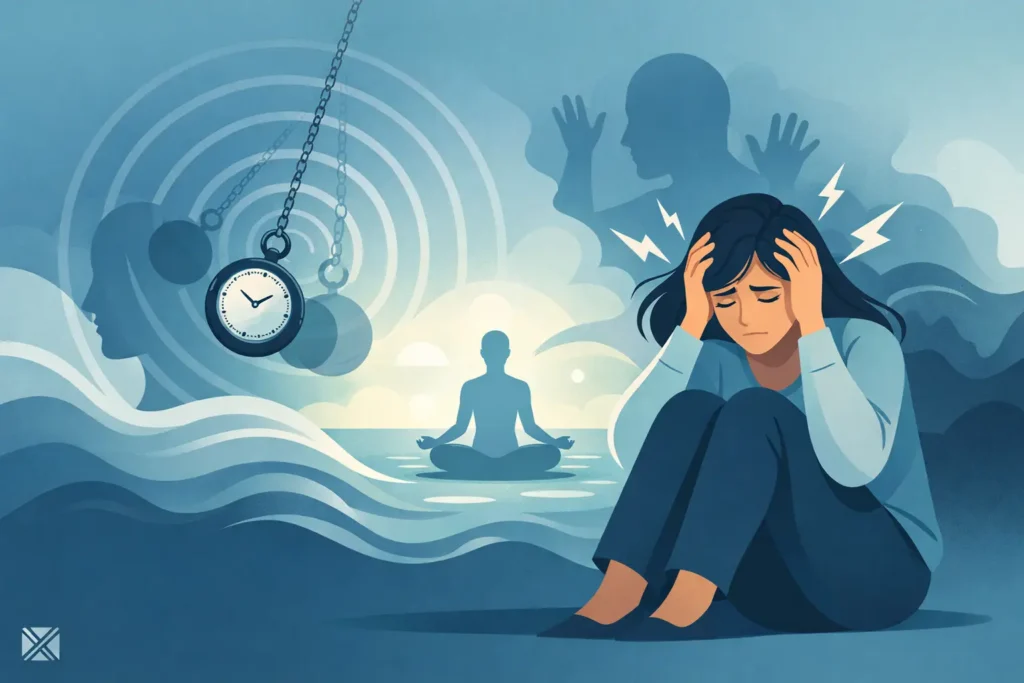
A panic attack can make a perfectly ordinary moment feel dangerous in seconds. You might be driving, standing in a queue, trying to sleep or sitting in a meeting, and suddenly your heart races, your chest tightens and your mind starts telling you something is badly wrong. If you are asking can hypnosis help panic attacks, the short answer is yes, it can help many people – but not in the simplistic, magic-wand way some expect.
Panic is not just a bad habit of thinking. It is a learned mind-body response that can become automatic. That is why so many people feel frustrated when logic alone does not stop it. You can know you are safe and still feel as if disaster is seconds away. Hypnotherapy can be useful because it works with the part of the mind where those automatic fear responses are running.
Can hypnosis help panic attacks by changing the fear pattern?
In many cases, yes. Panic attacks often grow from a cycle. First there is a sensation – perhaps a flutter in the chest, light-headedness or a change in breathing. Then the brain misreads that sensation as a threat. That triggers adrenaline, which creates more intense sensations. The person then becomes frightened of the sensations themselves, and the cycle builds.
Hypnosis can help interrupt that pattern. Rather than trying to battle panic head-on with force, hypnotherapy aims to calm the nervous system, reduce the fear attached to bodily sensations and retrain the unconscious response. That matters because panic is often maintained unconsciously. If the mind has learned to treat a supermarket, motorway, busy room or even bedtime as risky, your reactions can fire before your rational mind has time to catch up.
In a good session, hypnosis is not about being controlled. You do not lose awareness, reveal secrets or become helpless. Most people feel focused, calm and deeply absorbed. From that state, therapeutic suggestions and change work can land more effectively because the mind is less busy resisting and bracing.
What hypnotherapy for panic attacks actually targets
People often think the panic attack itself is the whole problem. Usually it is not. The bigger issue is the fear of having another one. That fear starts shaping behaviour. You may avoid shops, social situations, travel, exercise or being alone. Life begins shrinking around the problem.
This is where hypnotherapy can be especially valuable. It can help with the attack itself, but it also works on the anticipatory anxiety that keeps panic alive. The aim is not simply to get through one episode. The aim is to change your relationship with the sensations, the thoughts and the situations you have started to fear.
A practitioner may work on several levels. One is physical calming – helping your breathing, body awareness and nervous system settle faster. Another is mental interpretation – reducing catastrophic thinking such as “I’m going to faint”, “I’m having a heart attack” or “I’ll lose control in public”. Another is uncovering what may have trained the brain into this pattern in the first place.
For some people, panic begins after prolonged stress, a traumatic experience, illness, bereavement or a period of burnout. For others, it seems to come from nowhere, although there is usually a pattern underneath. If the root driver is not addressed, people can end up managing symptoms without really feeling free.
Why hypnosis helps some people more than others
Hypnotherapy is not a one-size-fits-all fix. Some people respond quickly because their panic is driven mainly by a conditioned fear response that is ready to be updated. Others need more layers addressed, especially if panic sits alongside trauma, health anxiety, agoraphobia or long-standing anxiety.
It also depends on the quality of the work. A generic relaxation recording may help you feel calmer for a while, but lasting change usually needs more than that. Effective hypnotherapy should be tailored. It should look at your triggers, your thought patterns, your history and the way panic has become wired into your daily life.
Readiness matters too. You do not need to be perfectly confident or free of doubt, but you do need to be willing to engage with the process. The people who do best are often those who are tired of being ruled by panic and ready to practise a new response, rather than waiting for reassurance every time fear shows up.
Can hypnosis help panic attacks if you have tried other things?
Very often, yes. Many people come to hypnotherapy after trying medication, counselling, self-help books or breathing exercises. Sometimes those things have helped a little, but not enough. Sometimes they have kept the problem manageable without really resolving it.
That does not mean those approaches are wrong. It means panic can have different drivers, and different people need different routes in. Talking therapies can be helpful for understanding your experience. Medication can reduce symptoms for some people. Practical coping tools can make day-to-day life easier. Hypnosis can complement these approaches or offer a different angle by targeting the automatic pattern more directly.
The key point is this: if you have struggled for a long time, it does not mean you are broken or beyond help. It may simply mean the approach has not yet matched the way your panic is operating.
What a good panic attack hypnotherapy approach should include
A decent practitioner will not just try to make you relax and send you on your way. Relaxation can be useful, but panic recovery usually needs more structure than that.
Good work often includes understanding what sets your panic off, explaining what is happening in the body so the symptoms feel less mysterious, reducing the fear response to those symptoms and building a stronger sense of control. It may also include work on underlying events or beliefs that keep your system on high alert.
This is one reason many clients do well with a combined approach rather than hypnosis in isolation. Hypnotherapy plus mind coaching, behavioural strategies and, where appropriate, trauma-focused techniques can be more effective than using one tool alone. When panic has become deeply embedded, you want an approach that is practical as well as therapeutic.
At Grimsby Hypnotherapy, for example, the focus is not on keeping people stuck in endless analysis. It is on helping them create meaningful change quickly and regain confidence in their own mind and body.
What hypnosis can and cannot do
Hypnosis can help reduce the frequency and intensity of panic attacks. It can help you feel calmer in situations that used to trigger fear. It can reduce catastrophic thinking and loosen the grip of avoidance. For many people, it can help them feel like themselves again.
What it cannot do is guarantee that you will never feel anxious again. Anxiety is part of being human. The goal is not to become emotionless. The goal is to stop normal sensations and stressful moments from spiralling into panic.
It is also important to be sensible. If you have new, severe or unexplained symptoms, get them medically checked. Panic symptoms can feel dramatic, and many are harmless, but proper assessment matters. Good hypnotherapy should support common sense, not replace it.
Signs hypnosis may be worth considering for panic attacks
If you are avoiding places because you fear having an attack, if your world has become smaller, if you constantly scan your body for signs of danger or if you feel trapped in a cycle of “what if it happens again?”, hypnotherapy may be worth exploring.
It may also help if your panic seems irrational to you but still feels overpowering, or if you are exhausted from trying to think your way out of something that keeps overriding logic. Panic is draining. It steals confidence, independence and trust in yourself. The longer it goes on, the more people start arranging their lives around it.
That is the part I would challenge. Panic may be loud, convincing and persistent, but it is not a life sentence. The brain can learn fear, and it can learn safety too. With the right support, many people stop merely coping and start getting real control back.
If that is where you are right now, take heart. You do not need to wait until life gets even smaller before you do something about it. A calmer mind is not built through force. It is built by teaching your system, step by step, that you are safer than panic has led you to believe.