
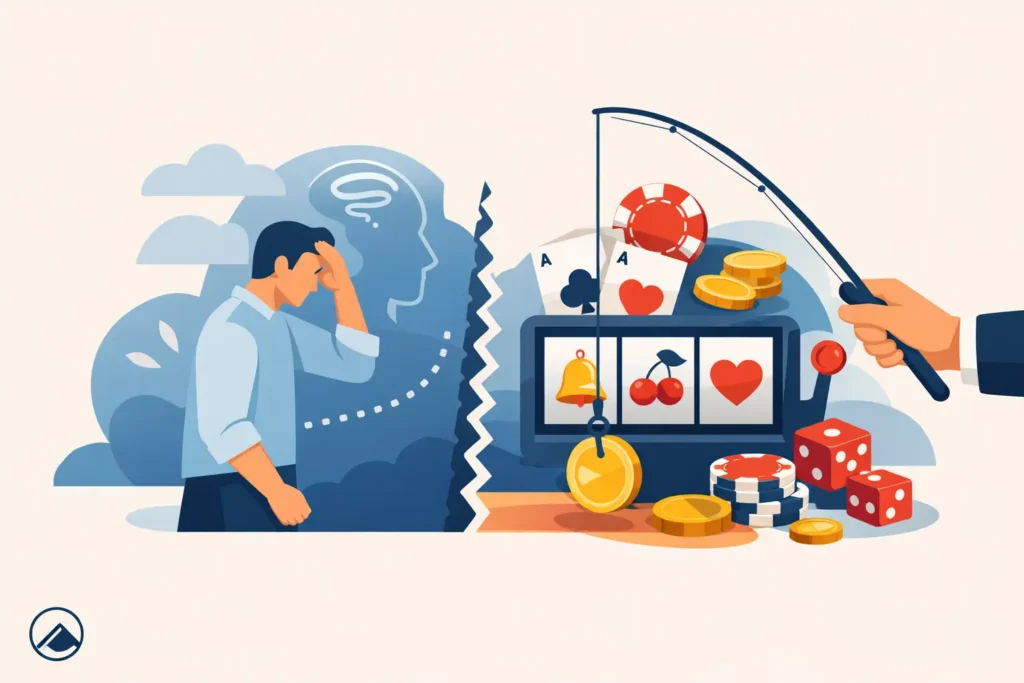
That moment usually comes fast. A payday notification. A football accumulator popping into your head. A row at home. A quiet hour on your own with your phone in your hand. If you are looking up how to overcome gambling urges, you probably already know the feeling. It can seem like the urge arrives out of nowhere and takes over before you have had a chance to think.
The hard part is not that you do not know gambling is hurting you. Most people do. The hard part is that the urge feels stronger than logic in that moment. You tell yourself it will just be a small bet, just this once, just enough to take the edge off or win back what you lost. Then the same pattern happens again, and afterwards you are left with the shame, the stress and the promise that next time will be different.
That cycle can wear people down. It affects sleep, money, trust, confidence and peace of mind. It can also leave families walking on eggshells, never quite sure whether things are getting better or whether another blow up is around the corner. If that is where you are, this matters. Not because you need more lectures, but because you need a way to break the pattern properly.
Why gambling urges feel so powerful
A gambling urge is not random. It is usually tied to something your mind has learned. For some people, gambling became linked to excitement. For others, it became a way to switch off stress, numb difficult feelings or escape pressure for a while. Sometimes it is about chasing losses. Sometimes it is about chasing relief.
That is why willpower alone often fails. If gambling has become your brain’s quick route to distraction, control or hope, the urge is not just about money. It is about what gambling has come to mean to you underneath it.
This is also why people can stop for a few days or even a few weeks, then suddenly go straight back. The external behaviour paused, but the internal driver stayed the same. The stress, restlessness, boredom, loneliness or emotional spike still finds the same old doorway.
How to overcome gambling urges without relying on willpower alone
If you want real change, the goal is not to spend the rest of your life trying to wrestle urges into submission. The goal is to reduce their power by changing the pattern that drives them.
That starts with being honest about one thing. The urge is not the problem on its own. The urge is the signal. It is telling you that a familiar chain reaction has started. Once you understand that, you can interrupt it much earlier.
In simple terms, there is usually a trigger, then a feeling, then a thought, then the behaviour. The trigger might be boredom on a Sunday afternoon. The feeling might be flatness or tension. The thought might be, I need something to lift me, or I can sort this out if I win. Then comes the bet.
When people keep trying to stop only at the behaviour stage, it feels like a constant fight. When they learn to catch the trigger and the feeling sooner, things start to shift.
The problem is rarely just the gambling
This is the part many people miss. Gambling is often the visible part of a deeper pattern. The real issue might be anxiety, unresolved stress, trauma, low mood, poor self worth or a long standing habit of escaping difficult feelings instead of processing them.
That does not mean you need years of talking about your past. It does mean that if the deeper driver stays in place, the urge can keep returning in one form or another. Some people stop gambling and then notice they start overdrinking, scrolling, binge eating or exploding in anger instead. The pattern changes shape, but it is still the same pattern.
So if you have tried to stop before and felt frustrated that it did not last, that does not mean you are weak. It usually means the real cause was not being dealt with properly.
Reframing the urge changes everything
Most people treat the urge like an order. It is not. It is a conditioned response.
That is an important difference. An order feels powerful and urgent. A conditioned response is something your system has practised. And what has been practised can be changed.
When the urge hits, instead of saying, here we go again, I am hopeless, try something more accurate. Say, this is the old pattern firing up. That small shift matters. It creates a bit of distance between you and the urge. It reminds you that you are not the urge. You are the person noticing it.
That distance is where control starts to come back.
What to do in the moment when the urge hits
You do not need a perfect routine. You need something simple enough to use when your thinking is not at its best.
First, slow the moment down. Gambling thrives on speed and impulse. Put time between the feeling and the action. Leave the room, put your phone in another room, go outside, ring someone, have a shower, make tea, walk round the block. It sounds basic, but basic works when it breaks momentum.
Second, name what is actually going on. Not just, I want to gamble. Ask, what am I feeling right now? Stressed? Angry? Lonely? Flat? Restless? The answer matters because the urge often weakens when you identify the real emotion underneath it.
Third, make it harder to act on the urge. Remove saved payment methods, hand over access to accounts if needed, block gambling apps, avoid the routes and routines that lead you there. This is not weakness. It is smart. If a pattern has become automatic, you need friction.
Fourth, do not negotiate with the urge. The mind is clever when it wants a fix. It will tell you this one is different. It usually is not. The more you debate with it, the more space it takes up.
These steps can help a lot in the short term. But if the urges keep coming back strongly, the deeper pattern still needs attention.
Why some people keep relapsing
Relapse is often treated like proof that someone does not want change badly enough. That is far too simplistic.
People relapse because the old wiring is still active. They hit a trigger, their nervous system reacts, and the behaviour they used for relief kicks in before the rational mind catches up. If stress, trauma or anxiety sits underneath the gambling habit, then pressure can push the whole thing back online very quickly.
There is also shame. Shame is one of the biggest drivers of repeated gambling. Someone gambles, feels awful, hides it, beats themselves up, feels even worse, then gambles again to escape how they feel. Unless that shame loop is interrupted, it keeps feeding the problem.
That is why a direct, structured approach matters. You do not just need coping tricks. You need change at the level where the pattern is being created.
Real change comes from updating the response
This is where proper support can make the difference. If gambling urges are tied to anxiety, emotional pain, old experiences or deeply rehearsed habits, then the work needs to target those drivers rather than just the symptom.
When that happens, people often notice something surprising. They are not constantly fighting the urge anymore. Situations that used to pull them in begin to feel flatter, less charged, less tempting. The trigger loses its grip because the unconscious response has changed.
That is what lasting change should feel like. Not white knuckling your way through every weekend. Not relying on endless self control. Real change feels calmer than that. More natural. More like being back in charge.
For some, that shift happens quite quickly once the right issue is identified. It depends on what is driving the habit and how long it has been there, but the key point is this: if you are only trying to manage the behaviour, you are making life harder than it needs to be.
If you are supporting someone else
Families often get pulled into detective mode. Checking bank statements, watching moods, waiting for signs. That pressure is exhausting.
If you are supporting someone with gambling problems, boundaries matter. So does honesty. Trying to rescue them from every consequence can sometimes keep the cycle going. At the same time, blame and lectures usually push the problem further underground.
The most useful stance is calm and clear. Acknowledge the problem, refuse to collude with it, and encourage proper help that deals with the root of the pattern rather than just another promise to stop.
How to overcome gambling urges for good
If you want to know how to overcome gambling urges for good, the answer is not to become tougher on yourself. It is to understand what the urge is doing there in the first place and change that pattern at the source.
That might mean dealing with anxiety that has been driving the need for escape. It might mean updating old emotional responses that keep pulling you back into self destructive choices. It might mean changing a deeply ingrained habit loop that has been running for years.
Whatever sits underneath it, the answer is the same. Stop treating the urge like the whole problem. It is the symptom. Once the driver changes, the grip can change too.
You do not need to stay trapped in the same cycle, making the same promises, carrying the same guilt. People can and do change this. Properly. And when they do, the relief is not just about no longer gambling. It is about getting your head back, your peace back and your self respect back.
Ready to experience real change or keep repeating the same pattern? Book your Real Change Meeting here https://Derekmindcoach.as.me/Meeting-60mins