
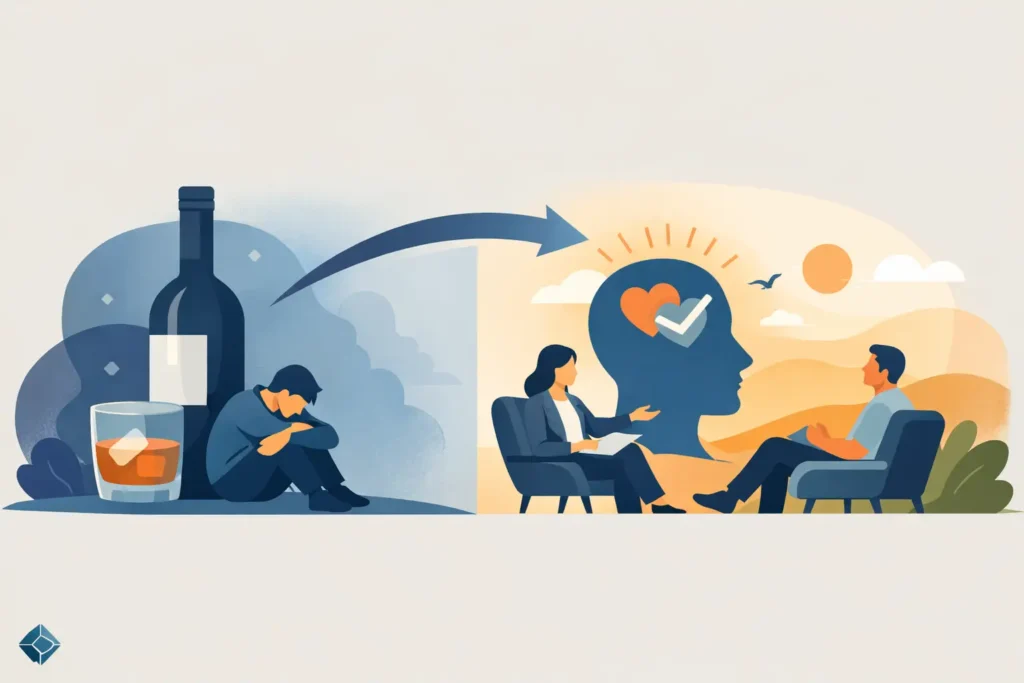
That promise you make to yourself usually sounds simple. Just cut back. Only drink at weekends. Stop after two. Then Friday comes, stress kicks in, or your mind starts looking for relief, and the same pattern runs again. That is why alcohol habit change therapy matters. It is not about telling you what you already know. It is about changing the pattern that keeps pulling you back.
If drinking has become your switch off, your reward, your numbing tool, or your way of getting through the evening, you are not weak and you are not broken. But you are likely stuck in something that has moved beyond a conscious choice. Most people already know the cost. They know how it affects sleep, mood, weight, relationships, confidence, work, and how they feel about themselves the next morning. The problem is not a lack of information. The problem is that insight alone rarely changes a habit that has settled into the unconscious.
Why alcohol habit change therapy is different
A lot of people try to deal with drinking by making stricter rules. They remove alcohol from the house, make deals with themselves, download trackers, and start again every Monday. Sometimes that helps for a while. But if the urge is tied to stress, anxiety, loneliness, trauma, pressure, boredom, or a need to switch off fast, rules can start to feel like a fight.
That is where alcohol habit change therapy is different. Instead of focusing only on the drinking itself, the work looks at what the habit is doing for you. Every repeating pattern has a reason, even when that reason is damaging. Drinking may be helping you feel relief, escape pressure, quiet your mind, or create a short lived sense of comfort. If you only attack the alcohol without changing the driver underneath it, the mind tends to look for the same relief again.
This is why willpower feels unreliable. Willpower is useful when you are fresh, focused, and calm. It is far less useful when you are tired, upset, triggered, or overwhelmed. In those moments, the older pattern usually wins because it is familiar and fast.
The real problem is rarely just the drink
People often say, I do not understand why I keep doing this. But when you slow it down, the pattern usually makes sense.
For some, drinking starts as a way to take the edge off anxiety. For others, it is a shut down button after years of pressure. Some people drink because they feel flat and want to feel something. Others use it to avoid racing thoughts at night. There are also people who grew up around drinking and simply absorbed it as the normal answer to stress, celebration, awkwardness, anger, or disappointment.
The habit may look the same on the outside, but the driver underneath can be very different. That matters because real change is not about using a generic script. It is about identifying what is actually happening in your case.
Sometimes alcohol is attached to trauma. Not always in an obvious way. A person may not think of themselves as traumatised, yet their nervous system is still stuck in survival mode, always looking for quick ways to settle. Sometimes it is linked to identity. The person who is always the social one, the fun one, the one who can handle it. Sometimes the pattern is tied to resentment, loneliness, or years of functioning while quietly struggling.
Until that is understood properly, people often blame themselves for failing at a battle they were never really equipped to win with logic alone.
Reframing the habit changes everything
One of the biggest shifts is this. The drinking habit is not the enemy. It is an attempted solution.
That does not mean it is a good solution. Clearly, if it is hurting your health, your home life, your confidence, or your peace of mind, it is costing too much. But when you see it as an attempted solution, the shame starts to lift. And when shame lifts, change gets easier.
Shame keeps people secretive. It keeps them stuck in all or nothing thinking. It pushes them towards the very behaviour they want to stop. Someone feels bad about drinking, so they drink to escape feeling bad, then wake up with even more guilt. That cycle can run for years.
A better approach is to ask what your mind has learned to expect from alcohol. Relief? Reward? Quiet? Distance? Confidence? Switching off? Once that is clear, the work becomes practical. You are no longer just trying to stop something. You are changing what your mind links to safety, comfort, calm, and control.
What proper change work looks like
Good therapy for alcohol habits should feel personal, direct, and focused. It should not leave you talking in circles for months while the same pattern keeps running in the background.
The aim is to understand the trigger, interrupt the automatic response, and update what is driving it. That may involve hypnotherapy, mind coaching, trauma work such as EMDR or MEMI, and structured change methods that help the unconscious mind stop reaching for the old pattern.
This matters because many habits are state dependent. When you are in a certain emotional state, your brain pulls up the familiar answer. If the familiar answer is alcohol, that becomes your default. Therapy helps break that link. It gives your mind another route.
For one person, that may mean removing the emotional charge from stress so the craving does not build in the same way. For another, it may mean updating an old fear response that has been fuelling anxiety for years. For someone else, it may mean changing self image. A lot of people still act in line with an old identity even after they have decided they want a different life.
This is why quick fixes often fail. They focus on behaviour without changing the operating system underneath it.
It is not about never wanting a drink again
Some people want to stop drinking completely. Others want control back. Both are valid, but the route depends on the individual.
The goal is not to force a moral position. The goal is freedom. If alcohol has become something that controls your choices, your evenings, your mood, or your self respect, then something needs to change. For some, that means complete abstinence because moderation has become one long negotiation. For others, the healthier target is no longer using alcohol as emotional first aid.
That is an important difference. If the need behind the habit is still active, white knuckling your way through temptation can feel exhausting. When the need changes, the grip often loosens much faster.
This is also why change can happen quicker than people expect. Not because someone is being fixed by magic, but because the right work goes to the right place. If you stop fighting the symptom and deal with the driver, things can shift fast.
What to expect if you are serious about changing it
Expect honesty. Expect to look at the pattern properly. Expect to stop hiding behind excuses that no longer serve you. But also expect relief, because many people feel better as soon as they realise there is a clear reason the habit has stayed in place.
You do not need another lecture on units, discipline, or what alcohol does to the body. You likely know all that already. What you need is a process that helps your mind stop treating alcohol like the answer.
That process should leave you feeling more in control, not more dependent on therapy. The point is not to keep managing the problem forever. The point is to change it.
For some people, the first real sign of progress is surprisingly small. They notice the urge come up and it no longer feels as powerful. They go through a stressful evening and do not automatically reach for a drink. They feel a trigger but it passes instead of taking over. Those moments matter because they show the pattern is no longer running your life in the same way.
If you have tried to change this before and it did not last, that does not mean you cannot do it. It usually means the method did not go deep enough, or it focused on control without understanding what needed to change underneath. There is a difference between coping and changing. If you want your life back, that difference matters.
Ready to experience real change or keep repeating the same pattern? Book your Real Change Meeting here https://Derekmindcoach.as.me/Meeting-60mins