
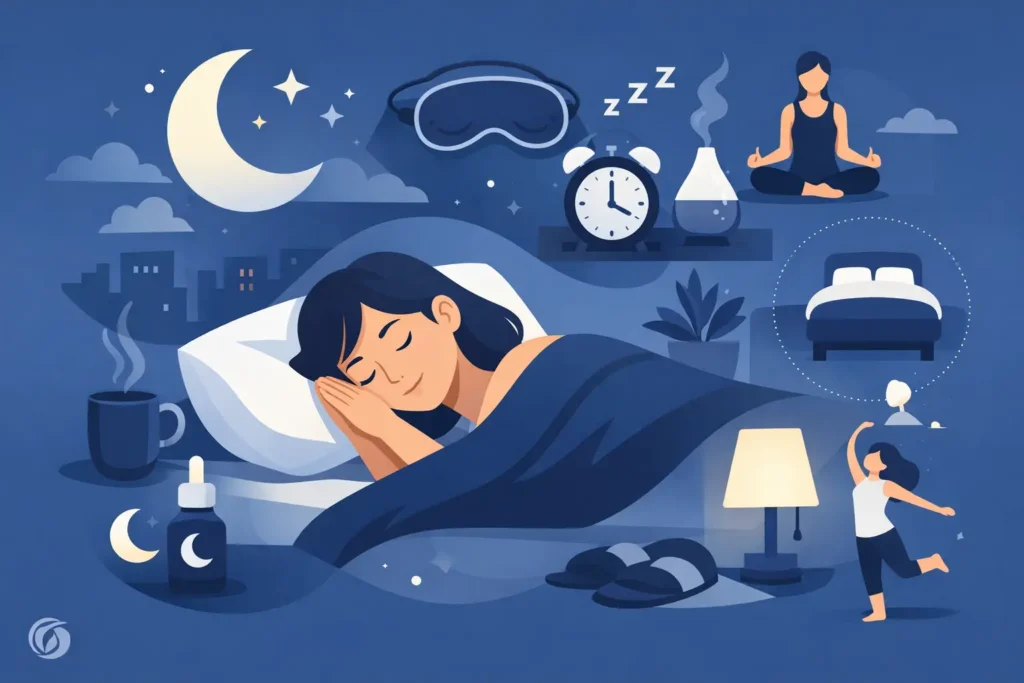
You can be exhausted all day, then fully awake the moment your head hits the pillow. That is one of the most frustrating parts of poor sleep. Your body is tired, your mind has other ideas, and the harder you push for sleep, the more awake you seem to feel. If you are looking for the best ways to sleep better, the answer is usually not one magic trick. It is a handful of simple changes that help your system feel safe enough to switch off.
For many people, sleep problems are not really about sleep. They are about tension, worry, overthinking, habit, and a mind that has learned to stay alert. That matters, because what has been learned can be changed. You are not broken. Your system may simply be repeating a pattern that no longer helps you.
Why sleep gets difficult in the first place
A lot of people blame themselves when they cannot sleep. They think they are doing bedtime wrong, or that they need more discipline. Sometimes that is part of it, but often the real issue sits underneath.
If your mind is scanning for problems, replaying conversations, worrying about tomorrow, or waiting for something to go wrong, sleep becomes harder. Fear is often an illusion, a story the mind creates to keep us safe. Useful when there is real danger. Less useful at 2.13 am when your biggest threat is the alarm clock.
That is why forcing sleep rarely works. Sleep comes when the body eases out of alert mode. If your system still thinks it needs to be on guard, it will not settle properly, no matter how expensive your mattress is.
The best ways to sleep better start before bedtime
Most sleep advice focuses on the last ten minutes before bed. In real life, better sleep usually starts earlier.
If your day is full of rushing, pressure, caffeine, doom scrolling and mental noise, your body does not always switch off neatly at night. It carries that state forward. Think of it like a warning light on a dashboard. The warning light is not always the real problem. The pattern keeping it switched on needs to change.
That means your evening needs a bit less stimulation and a bit more breathing space. Not in a perfect, candles and flute music sort of way. Just enough to let your system get the message that the day is ending.
Give yourself a clear wind down
Many people go straight from work mode, family mode, or phone mode into bed and expect instant sleep. That is a big ask.
A proper wind down does not need to be fancy. Dim the lights a little. Put the phone down earlier. Keep conversation calm if you can. Watch something easy rather than something intense. Read a few pages of a book. Have a shower or bath. The point is not the activity itself. The point is consistency.
When your body starts to recognise the same evening cues, it learns what comes next. That is useful if your nights currently feel random and frustrating.
Be careful with caffeine later in the day
This one sounds obvious, but it catches more people out than they realise. If you are sensitive to caffeine, that afternoon coffee, energy drink, or even strong tea may still be hanging around at bedtime.
Some people can drink coffee at nine at night and sleep like a baby. Slightly annoying, but true. Others have one at three in the afternoon and stare at the ceiling till midnight. It depends on your system. If sleep is poor, cutting caffeine earlier is one of the easiest things to change.
Alcohol can make sleep worse
A drink in the evening may make you feel sleepy, but sleepy and well rested are not the same thing. Alcohol often knocks people out quickly, then leads to lighter sleep, more waking, and that flat, unrefreshed feeling the next day.
If you regularly use alcohol to switch off, it is worth being honest about that. The issue is not always the real issue. Sometimes poor sleep is being held in place by the very thing meant to fix it.
Best ways to sleep better when your mind will not switch off
This is where many people get stuck. Their body is in bed, but their mind is still running laps.
Thoughts are not facts. That matters at night, because tired minds can be dramatic. Everything feels bigger in the dark. Problems seem more urgent. Regrets get louder. Tomorrow looks harder. None of that means the thought is true. It just means you are tired and alert at the same time.
Stop making sleep a performance
The more pressure you put on sleep, the worse it tends to get. Clock watching, counting how many hours are left, checking how tired you will be tomorrow, all of that increases tension.
If you wake in the night, avoid turning it into a mental emergency. You are awake. Fine. That is all that is happening right now. Once the running commentary starts, your body hears it as a reason to stay alert.
A calmer response often helps more than a clever trick. Slow your breathing. Let your shoulders soften. Remind yourself that resting quietly is still useful, even if sleep is taking its time.
Get thoughts out of your head before bed
If your mind becomes busy the moment things go quiet, give it a place to offload earlier in the evening. A few minutes with pen and paper can help. Write down what is on your mind, what needs doing tomorrow, and anything you do not want to carry into bed.
This is not about solving your life at 10 pm. It is about telling your mind, I have seen this, I will deal with it later, you do not need to keep waving it at me all night.
If you cannot sleep, do not stay there battling
Lying in bed for ages getting annoyed can teach your mind that bed is a place for frustration. If you have been awake a while and feel yourself getting wound up, get up for a bit. Keep the lights low. Sit somewhere quiet. Read something gentle or just breathe for a few minutes.
Then go back to bed when you feel sleepier. It is a simple shift, but it can break the pattern of bed equals stress.
Your bedroom matters, but not as much as people think
Yes, your room should be comfortable, dark enough, and not too warm. Yes, a decent pillow helps. And yes, if your partner snores like a broken motorbike, that is relevant.
But do not fall into the trap of thinking sleep only improves once you have bought a special lamp, a white noise machine, a weighted blanket, a sleep spray, and something with lavender in it. Helpful for some people, not essential for everyone.
The basics matter most. A room that feels calm, a consistent routine, and less mental and physical stimulation before bed will usually do more than gadgets.
When anxiety is the real reason you are not sleeping
Sometimes poor sleep is not a stand alone problem. It is a sign that your system is stuck on high alert.
If you dread bedtime, wake with a jolt, feel tense for no clear reason, or spend nights replaying fears and worst case scenarios, anxiety may be driving the pattern. And if that is the case, sleep tips alone may only take you so far.
This is why some people follow all the usual advice and still lie awake. The deeper pattern has not changed. The warning light is still on.
That does not mean you are stuck like this. It means the real issue needs dealing with properly. When the mind and body stop treating the night like a threat, sleep often improves as a result.
A simple routine that genuinely helps
If you want something practical, keep it basic. Wake up at roughly the same time each day. Get some daylight in the morning. Ease off caffeine earlier. Give yourself a wind down in the evening. Keep screens lower near bedtime. Do not take your problems to bed and expect sleep to sort them out for you.
If your mind is busy, write things down before bed. If you wake in the night, do not make it a drama. If your sleep is being disrupted by ongoing anxiety, look at that honestly instead of only chasing sleep hacks.
That is often where real change starts. Not by doing more, but by seeing the pattern clearly.
When to get extra help
If poor sleep has been going on for a while and it is affecting your mood, work, relationships or daily life, it may be time to get help with what is driving it. Especially if you have already read all the advice, changed the mattress, cut the caffeine, and still feel stuck.
You do not need another theory. You need something that helps change the pattern keeping you awake.
Sometimes sleep improves when a person finally stops fighting the symptom and deals with what is feeding it. That might be anxiety, stress, fear, or an old learned response that no longer fits your life now.
Better sleep is rarely about perfection. It is about helping your system feel safer, calmer and less switched on. Start there. A tired mind can make the night feel bigger than it is, but nights change when the pattern changes.