
Best Techniques for Trauma Triggers (Without Reliving the Past)
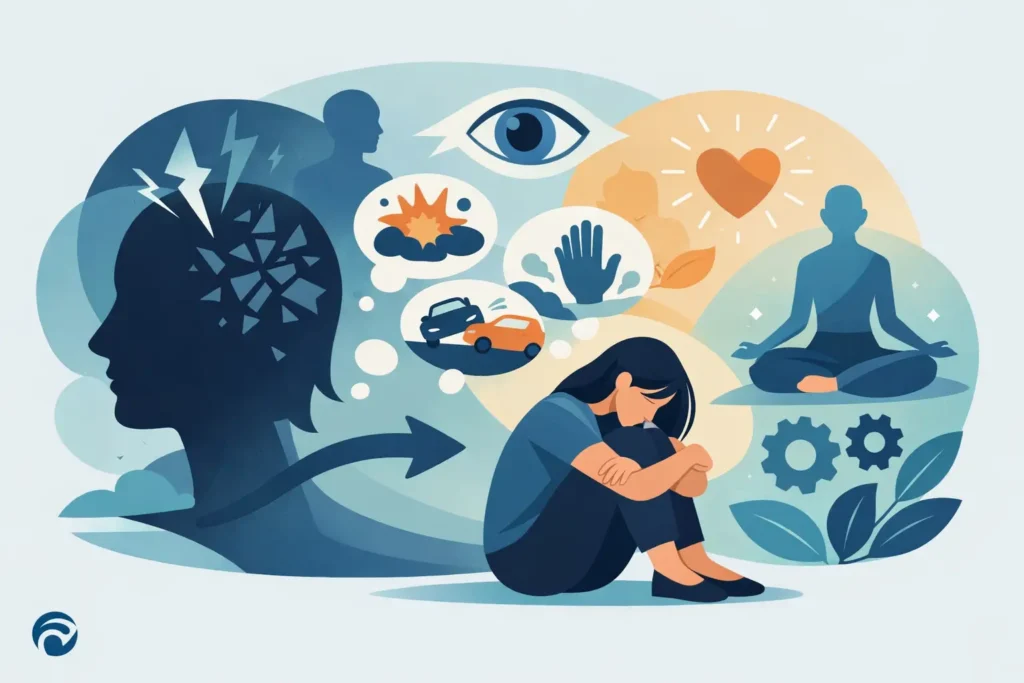
A trauma trigger rarely arrives with a warning. One smell, one tone of voice, one place, one memory and your body reacts before your mind has caught up.
When people search for the best techniques for trauma triggers, they are not looking for theory. They want to know how to steady themselves when the reaction feels immediate, intense and hard to control.
But there is something important most people are not told.
Triggers are not the problem.
The pattern behind them is.
—
Why Trauma Triggers Feel So Intense
A trigger is not proof that you are weak or going backwards. It is your nervous system trying to protect you using an old pattern.
The mind and body do not time-stamp emotions. If something reminds you of an experience, your system can react as if it is happening now.
That is why the reaction feels real.
Same physical response Same emotional surge Same sense of urgency
Even when logically you know you are safe
—
The Problem With Just Talking About Trauma
I have worked with clients who were retraumatised by well-meaning counselling.
One client spent two years being asked the same question every week “How did that make you feel?”
She said the therapist was a nice lady. But she never felt better. In fact, she dreaded going.
Because every session pulled her back into the same emotional state.
That is the issue.
If you keep revisiting the feeling without changing it, the mind and body keep practising the problem.
After just a handful of sessions working differently, she said something that stood out:
“It’s not just talking about the problem… It’s changing how you feel about it.”
That is the difference.
—
Start With the Body, Not the Story
When you are triggered, your thinking brain is not in charge.
Trying to analyse it in that moment often makes it worse.
Start with the body:
- Feel your feet on the ground
- Look around and orient yourself
- Hold something solid or cold
- Let your breath out slowly
Movement helps too:
- Stand up
- Walk
- Shake out tension
You are not trying to “fix it” You are interrupting the pattern
—
Early Signs Your Trauma Is Still Driving Reactions
This is where most people miss it.
- Overreaction to small things
- Sudden anxiety or shutdown
- Avoiding certain people or situations
- Feeling on edge without knowing why
- Replaying conversations or memories
These are not random.
They are patterns.
—
Why Trying to Handle It Alone Often Fails
Many people think they should be able to deal with it themselves.
That is not a strength. That is a delay.
If the trigger is linked to trauma, anxiety, or emotional memory, willpower is not enough.
Because you are trying to control the reaction Instead of changing what is causing it
—
What Actually Helps With Trauma Triggers
The best techniques for trauma triggers do two things:
- Calm the body
- Change the meaning attached to the memory
If you only calm the body, the trigger comes back If you only talk about the memory, you relive it
Real change comes from updating the pattern
—
How Hypnotherapy Helps Change Trauma Patterns
This is where approaches like hypnotherapy and mind coaching come in.
You do not need to tell your whole life story.
I say this to clients all the time:
I am not nosy I do not do drama I do not even watch EastEnders
You can tell me as much or as little as you want You will still get a result
Because the focus is not on retelling the past It is about changing how your mind responds to it
Hypnotherapy helps by:
- Reducing the emotional charge
- Breaking automatic reactions
- Updating how the memory is stored
- Giving you control back
—
Be Careful With Avoidance
Avoidance feels safe in the short term.
But long-term, it shrinks your world.
The goal is not to force yourself into situations And not to hide from them either
It is to change the response
—
When To Get Help With Trauma
If you are experiencing:
- Strong emotional reactions
- Panic or shutdown
- Repeating patterns
- Relationship strain
- Addictive coping
Then it is not something to ignore.
The earlier you deal with it The easier it is to change
—
Get Help for Trauma in Grimsby or Online
At Grimsby Hypnotherapy, the focus is on changing patterns at the level they were formed.
Not just talking about them Not just managing them
Changing them
So you can feel calm, in control, and more like yourself again
Sessions are available in person in Grimsby or online across the UK
—
Frequently Asked Questions
Can trauma triggers be stopped completely? Yes. When the underlying pattern is changed, the trigger loses its intensity and often disappears.
Do I need to talk about everything that happened? No. Change does not require reliving every detail.
Why do triggers feel so real? Because the body reacts based on learned patterns,not current reality.
—
Final Thought
You are not overreacting.
You are responding to something your system learned.
And anything learned Can be updated
—
CTA
If this feels familiar, the pattern is already running.
The earlier you interrupt it, the easier it is to change.
Book a confidential one-to-one first meeting today. In person in Grimsby or online across the UK. https://tr.ee/v4AIrq