
Some people can tell you exactly what happened to them.
Others cannot.
They just know that something feels off.
They overreact to small things. They shut down in arguments. They cannot relax when life is going well. They keep choosing the same damaging relationship, the same drink, the same escape route, then wonder why nothing changes.
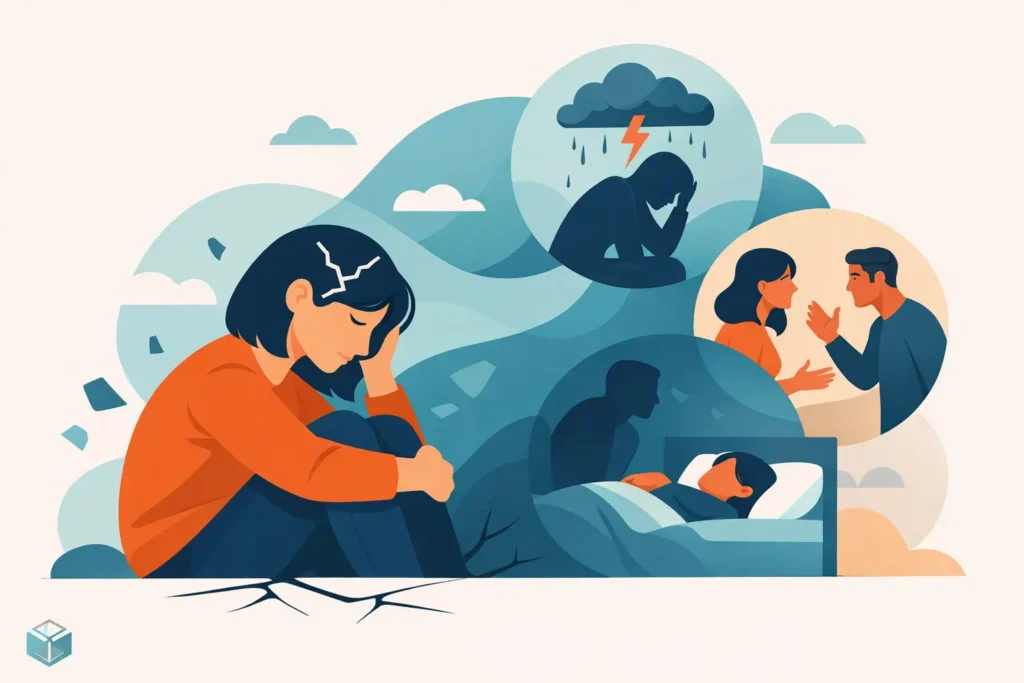
The top signs unresolved trauma are not always dramatic. Often, they look like everyday anxiety, anger, avoidance or habits that have become hard to control.
That does not mean you are broken.
It may mean part of you learned a rule years ago and has been following it ever since.
Top Signs of Unresolved Trauma in Everyday Life
Trauma is not only about one major event. It can come from bullying, rejection, loss, a difficult home, being criticised constantly, an accident, violence, illness or feeling alone when you needed someone.
What matters is not whether another person thinks it was “bad enough”.
What matters is the meaning your mind gave it at the time.
A child who repeatedly hears they are useless may grow into an adult who works themselves into the ground, cannot accept praise and feels panic at the thought of getting something wrong. The event is over. The pattern is not.
You react before you have time to think
A look from someone. A certain tone of voice. A message left unanswered.
Suddenly, you feel rejected, threatened, angry or ashamed.
Logically, you may know the situation is small. Emotionally, it feels enormous. Your reaction is not really about what happened this morning. It is often connected to what that moment reminds your system of.
This is why people say, “I don’t know why I went like that.”
The reaction makes sense when you understand the pattern behind it.
You stay alert, even when nothing is wrong
You may find it difficult to sit still. Quiet feels uncomfortable. You scan rooms, conversations and faces for signs that something is about to go wrong.
You may plan for every possible problem. You may sleep lightly. You may feel tense in your shoulders, jaw or stomach without noticing until it becomes normal.
Being alert may once have felt necessary. It may have helped you get through a difficult time.
But a protection that never switches off becomes exhausting.
You avoid things that matter to you
Avoidance can look sensible from the outside.
You do not apply for the job because you are “not ready”. You do not drive on motorways because it feels safer not to. You do not speak up because keeping quiet avoids conflict. You do not get close to people because distance feels more controlled.
The trouble is, avoidance teaches fear that it was right.
Each time you step away, the fear gets a little more convincing. Your world gets smaller. Not because you lack strength, but because the old pattern has taken control.
You use habits to switch your feelings off
Alcohol. Food. Gambling. Scrolling. Work. Anger. Sex. Shopping. Staying busy every minute of the day.
The habit is rarely the whole problem.
It is usually an answer to a feeling you do not want to feel. For a short while, it brings relief. Then comes guilt, regret or the familiar promise that tomorrow will be different.
If a habit feels stronger than your own choice, it is worth asking what it is doing for you. What feeling does it remove? What does it stop you having to face?
That question gets closer to the real issue.
Relationships feel harder than they should
You may want closeness but pull away when someone gets too close.
You may need reassurance again and again, yet struggle to believe it when it comes. You may expect people to leave, lie, criticise or let you down. So you test them, please them, control the situation or leave first.
None of this means you are difficult.
It means you may have learned that closeness comes with danger, disappointment or a cost. That belief can run a relationship long after the original people and circumstances have gone.
You carry shame that does not belong to you
Shame is different from guilt.
Guilt says, “I did something wrong.” Shame says, “There is something wrong with me.”
People carrying unresolved trauma often blame themselves for what happened, even when they were a child or had little control. They become their own harshest critic. They replay mistakes. They feel they have to earn rest, love or acceptance.
That voice may sound like your own.
Often, it started somewhere else.
You cannot enjoy calm
This catches many people out.
They finally get a quiet evening, a good relationship, stable work or a period without drama. Instead of enjoying it, they feel unsettled. They pick an argument. They overthink. They wait for the bad news.
Calm can feel unfamiliar when you have spent years expecting trouble.
Your mind may mistake familiar stress for normality. It does not mean you want chaos. It means calm is a pattern you have not yet learned to trust.
Why Knowing the Signs Is Not Enough
Reading a list and recognising yourself can be a relief.
It can also become another way of managing.
You understand why you react. You can name the pattern. But when the same feeling arrives on Tuesday afternoon, you still snap, freeze, drink, avoid or disappear into your own head.
That is because insight alone does not always change the emotional meaning attached to the past.
You do not need to keep reliving every detail to make a change. In fact, repeatedly going over old events without changing the meaning can keep the pattern active. The aim is not to pretend the past did not happen.
The aim is to update it.
To stop an old fear making current decisions.
To recognise that the adult you are now has more choice, more control and more understanding than the person you were then.
What Real Change Can Look Like
Real change is not never feeling anxious again.
It is noticing anxiety without letting it run the day. It is being able to pause before reacting. It is saying no without spending three days feeling guilty. It is having a difficult conversation without shutting down or exploding.
For some people, the first change is sleep.
For others, it is the moment they realise they have not thought about the fear all week. A client may walk into a meeting, drive somewhere new, turn down a drink or stop checking their phone for reassurance – and only afterwards notice how different that feels.
Small evidence matters.
It shows your old pattern is not your personality. It is a learned response. Learned responses can change.
This is not about forcing yourself to “get over it” or pretending pain never mattered. It is about getting honest about what is still affecting you and deciding that the past does not get to keep writing the rules.
When to Take It Seriously
Everyone has difficult days. Everyone can be anxious, angry or withdrawn after stress.
But it is time to look more closely when the same reactions keep costing you sleep, work, health, relationships or peace of mind. Especially when you have promised yourself you will change, then found yourself back in the same place.
You may have spent years calling it your personality.
“I’m just an anxious person.”
“I have always had a bad temper.”
“I cannot trust anyone.”
Maybe that is not the truth.
Maybe it is an old pattern that has had far too much say.
You do not need years of talking in circles. You need to understand what is driving the reaction and change the emotional meaning behind it. That is where real change begins.
The question is not whether the past happened.
The question is: how much longer do you want it making your choices for you?