
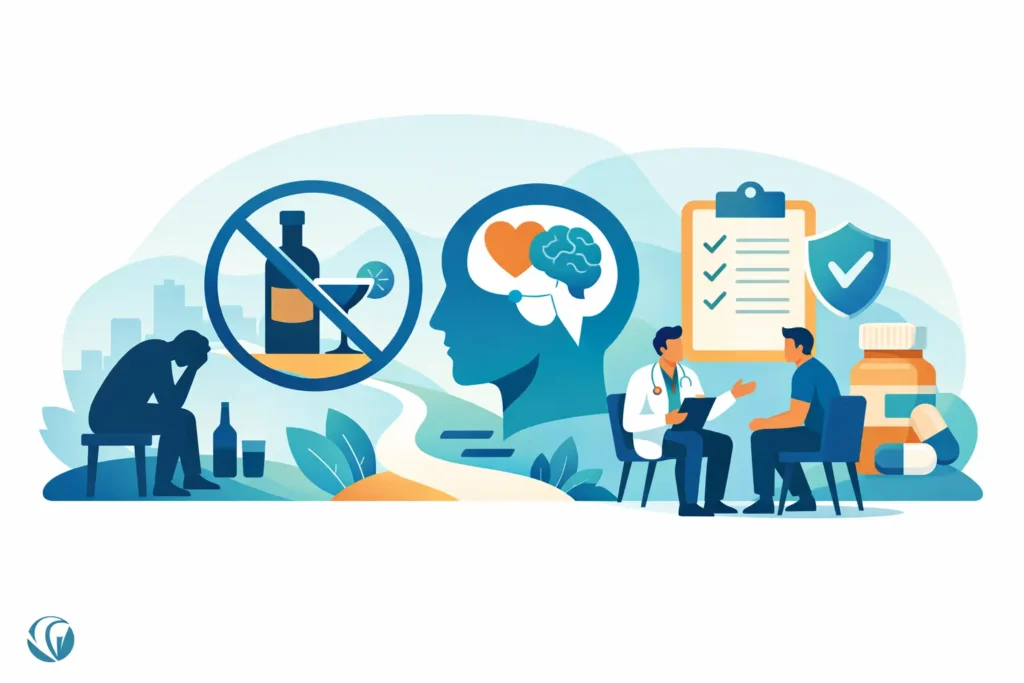
What Is the Best Treatment for Drinking Habits?
You do not need another lecture about alcohol.
You already know drinking too much is causing problems.
You know what it costs.
The money.
The broken promises.
The arguments.
The anxiety the following morning.
The guilt.
The constant bargaining.
“I’ll only have two tonight.”
“I’ll stop after this weekend.”
“This time will be different.”
Most people who contact me already know alcohol is damaging their life.
Knowledge is rarely the problem.
The real question is much deeper.
Why do I keep doing something I know is hurting me?
That is the question worth answering.
Because drinking is rarely just about alcohol.
It is about what alcohol has come to mean.
Alcohol is often the beginning of the pattern
One of the biggest mistakes people make is believing alcohol is completely separate from everything else.
It often isn’t.
Over the years I’ve worked with people struggling with alcohol, cocaine, cannabis and other drugs.
Something appears again and again.
Alcohol was the gateway.
People rarely tell me they woke up on a Tuesday morning craving cocaine.
They tell me they went out for a few drinks.
Their judgement changed.
Their confidence changed.
Their boundaries disappeared.
Then came the cocaine.
Or the cannabis.
Or whatever had become part of that night.
The drug may change.
The pattern often doesn’t.
That is why simply stopping cocaine without addressing alcohol frequently leads people straight back into the same cycle.
If alcohol remains the gateway, the door is still open.
The real work is understanding why your mind keeps needing that escape in the first place.
It isn’t about weak willpower
Many people blame themselves.
They tell themselves they’re weak.
Lazy.
Broken.
That they simply need more discipline.
I don’t believe that.
I’ve met teachers.
Police officers.
Business owners.
Doctors.
Parents.
Professional footballers.
Successful business people.
Strong people.
Intelligent people.
Kind people.
None of them woke up one morning and decided they wanted alcohol to take over their life.
Like many habits, it developed one decision at a time.
Then one day they realised the habit was making the decisions for them.
That’s a very different thing.
People are not broken.
They’ve learned a pattern.
And what has been learned can be changed.
So what is the best treatment?
People often ask me,
“What’s the best treatment for drinking habits?”
The honest answer is…
The best treatment is the one that changes what alcohol does for you.
That might sound obvious.
It isn’t.
If alcohol still represents relief…
Confidence…
Escape…
Reward…
Connection…
Or simply the switch that turns your mind off after another stressful day…
Then stopping becomes a battle.
You might stop for a week.
Perhaps a month.
Sometimes even longer.
But when life becomes difficult…
The old pattern quietly returns.
Not because you failed.
Because the reason for drinking never actually changed.
Willpower has its place.
Of course it does.
But willpower alone rarely changes a deeply learned emotional pattern.
Real change begins when alcohol no longer feels important in the same way.
That is very different from forcing yourself not to drink.
Why most drinking advice misses the point
Much of the advice available today focuses on behaviour.
Count your units.
Avoid pubs.
Drink water.
Keep busy.
Remove temptation.
Some of that is sensible.
Some of it genuinely helps.
But what happens if alcohol has become your way of dealing with anxiety?
Or pressure?
Or loneliness?
Or anger?
Or old emotional pain?
Or simply the only time your head finally becomes quiet?
Removing the bottle doesn’t automatically remove the reason you reached for it.
It’s a bit like removing the warning light from your car dashboard.
The light disappears.
The engine problem doesn’t.
This is where many people become frustrated.
They’ve tried everything.
Medication.
Counselling.
Talking therapies.
Support groups.
Sometimes even rehabilitation.
Yet part of them still wants a drink.
Not because they’re weak.
Because the pattern underneath has never really changed.
That is why I rarely start by asking how much someone drinks.
I’m far more interested in one simple question.
What job has alcohol been doing for you?
Because once we understand that…
We know where real change begins.