
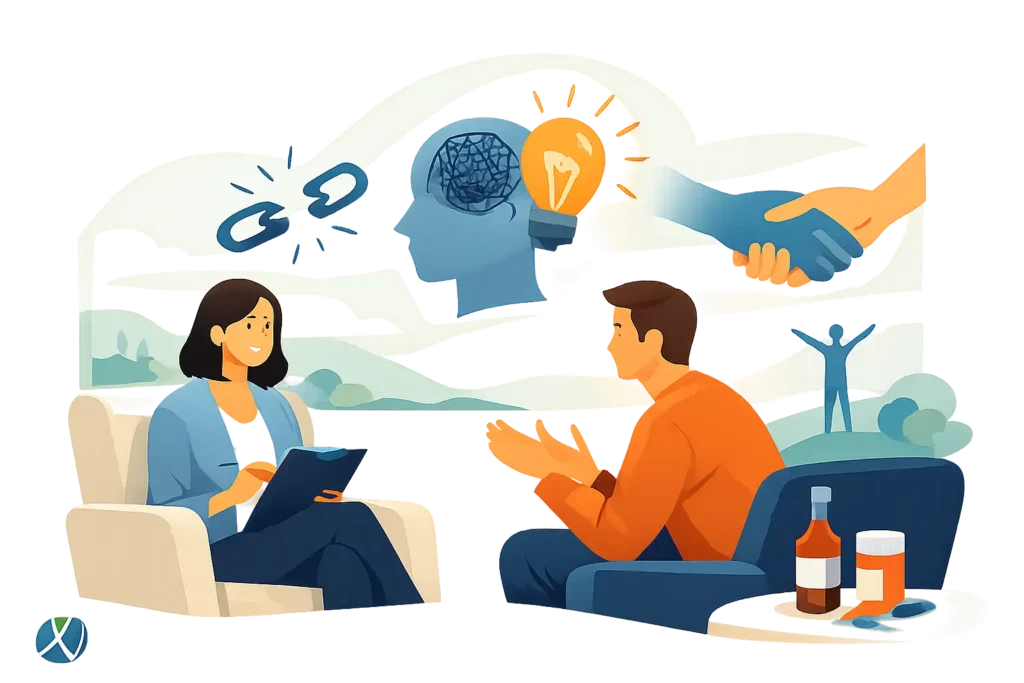
If you are searching for an addiction therapist Lincolnshire clients can trust, there is a good chance you are already tired. Tired of promises. Tired of trying to control something that keeps coming back. Tired of watching alcohol, gambling, smoking, drugs, porn, food, or another habit take up more space in life than it should.
Most people do not wait until things are completely broken before they look for help. They look when they are fed up. When they are hiding things. When relationships are strained. When sleep is poor. When anxiety is worse. When they know they are doing something they do not actually want to keep doing, but stopping feels harder than it should.
That is the part many people misunderstand about addiction. If willpower alone fixed it, you would have sorted it by now.
Why addiction is not just a bad habit
Addiction often gets treated like a character flaw. It is not. That does not mean there is no responsibility involved. There is. But shame is a poor tool for change.
Most addictive patterns start for a reason. Something gives relief. It might switch off stress for a while. It might numb anger, loneliness, guilt, pressure, boredom, grief, or old emotional pain. It might create a break from racing thoughts. It might help someone feel confident, calm, switched off, or in control, even if only briefly.
The problem is not just the thing itself. The problem is what your mind has learned about it.
When the unconscious mind links a substance or behaviour to relief, survival, comfort, reward, or escape, it keeps pulling you back towards it. That is why many intelligent, capable people end up repeating a pattern they hate. On the surface they want to stop. Underneath, part of the mind still sees the habit as useful.
Until that changes, people often end up in a fight with themselves. One part says stop. Another part says not yet, just once more, tomorrow, after this week, after this row, after this stressful day. That inner split is exhausting.
What an addiction therapist in Lincolnshire should actually help you do
A good addiction therapist in Lincolnshire should do more than listen sympathetically while you repeat the same story every week. Being heard matters, but insight alone does not always create change.
Real progress usually means getting to the driver of the pattern and changing how your mind responds. That might involve reducing the emotional charge behind urges, updating old trauma, breaking the learned link between stress and the addictive behaviour, and building a stronger internal sense of control.
It also means being honest about what kind of help is needed. Some people need specialist medical support alongside therapy, especially where alcohol, drugs, or severe dependency are involved. That is not weakness. It is common sense. For others, the main issue is not physical dependency but a deeply wired emotional or behavioural loop. In those cases, practical one to one work focused on unconscious change can be exactly what finally shifts it.
This is where a results driven approach matters. If someone has already spent months or years talking about the problem without real movement, they do not need more analysis for the sake of analysis. They need change they can feel.
Why addiction keeps coming back
People often think relapse or repeated use means they did not want it badly enough. That is usually far too simplistic.
Addiction tends to return when the original driver has not been dealt with. You can remove the behaviour for a while, but if stress, trauma, anxiety, low confidence, grief, or emotional overload are still sitting underneath, the mind will often go looking for the same old answer.
That is why one habit can disappear and another take its place. Someone stops drinking and starts overeating. Stops smoking and starts gambling. Stops gambling and becomes obsessive in another area. The target changes, but the pattern stays alive.
The real issue is not just what you do. It is what your system has learned to do when life feels too much.
For some people, addiction also becomes part of identity. They stop trusting themselves. They start saying things like, this is just how I am, I always mess things up, I cannot cope without it. Once that happens, change feels even further away, because the habit is no longer just something they do. It starts to feel like who they are.
It is not who they are.
The reframe that changes everything
You are not weak because something got wired in strongly. You are not broken because your mind found a fast way to cope. But you do need to take that pattern seriously.
The most useful reframe is this: addiction is often a learned solution that has outlived its purpose.
At some point, it helped. It gave relief, distraction, reward, numbness, certainty, or escape. But what once felt like a solution can become the thing that now damages confidence, health, relationships, finances, sleep, and peace of mind.
When people see addiction this way, shame starts to loosen. That matters, because shame keeps people stuck. It drives secrecy. It fuels the very state that makes urges stronger. You feel bad, so you reach for the thing that briefly makes you feel less bad, then you feel worse afterwards. Round and round it goes.
Change starts when the pattern is understood properly and challenged at the right level.
What effective addiction work can look like
An effective addiction therapist Lincolnshire clients choose is usually someone who is direct, calm, and not shocked by what they hear. You do not need judgement. You need clarity.
In practical terms, good work often focuses on what triggers the behaviour, what state you go into before it happens, what payoff the mind expects, and what deeper material is feeding it. That might include unresolved trauma, stress, fear, rejection, pressure, loneliness, or habits built over many years.
This is also why different tools can matter. Approaches such as hypnotherapy, mind coaching, EMDR and MEMI can help shift patterns at the level where they are actually being run, rather than simply discussing them. For many people, that feels very different from trying to think their way out of something that is not being driven by logic in the first place.
Sometimes people worry that therapy means going over painful parts of the past in detail. It does not always have to work like that. Trauma can be updated without dragging someone back through every event. That matters for people who want relief but do not want to spend months reopening old wounds.
There is also a big difference between support that creates dependency and support that helps you take control. The aim should not be to keep you in therapy forever. The aim should be to help you stop needing the pattern.
When local support matters and when online works just as well
For some people across Grimsby, Cleethorpes, Louth, Barton and the wider area, seeing someone face to face feels right. It feels more grounded, more personal, more real. For others, Zoom is easier. It removes travel, fits around work and family life, and often helps people access support sooner instead of putting it off.
What matters most is not whether the chair is in the same room. It is whether the work is clear, focused, and able to get to the root of the problem.
That is especially true for people who have already tried other routes and felt disappointed. If you have had support before and it did not stick, that does not mean you cannot change. It may simply mean the approach did not match the real problem.
What to look for before you choose help
If you are choosing an addiction therapist in Lincolnshire, look past vague promises and ask yourself a few honest questions. Does this person sound like they understand patterns, not just symptoms? Do they speak plainly? Do they focus on change, not endless dependency? Do they work in a way that feels practical and personal rather than generic?
You also want someone who can handle complexity. Addiction rarely sits on its own. Anxiety, trauma, low confidence, poor sleep, self criticism, and relationship strain often come with it. If those pieces are ignored, progress can be patchy.
At the same time, beware of anyone pretending there is one answer for everybody. It depends on the addiction, the level of dependency, the reason it took hold, and what else is going on in that person’s life. Good therapy is not cookie cutter. It is tailored.
There is a reason so many people stay stuck for years. They are trying to force a conscious solution onto an unconscious problem. Once you understand that, things begin to make more sense. And when the right process is used, change can happen much faster than people expect.
If you are reading this for yourself, or for someone you care about, the main thing to know is that staying stuck is not proof that nothing works. It usually means the pattern has not been addressed properly yet. That is very different.
You do not need another lecture. You do not need more shame. You need the right help, aimed at the right target, so you can stop living in reaction and start feeling in control again.
Ready to experience real change or keep repeating the same pattern? Book your Real Change Meeting here https://Derekmindcoach.as.me/